
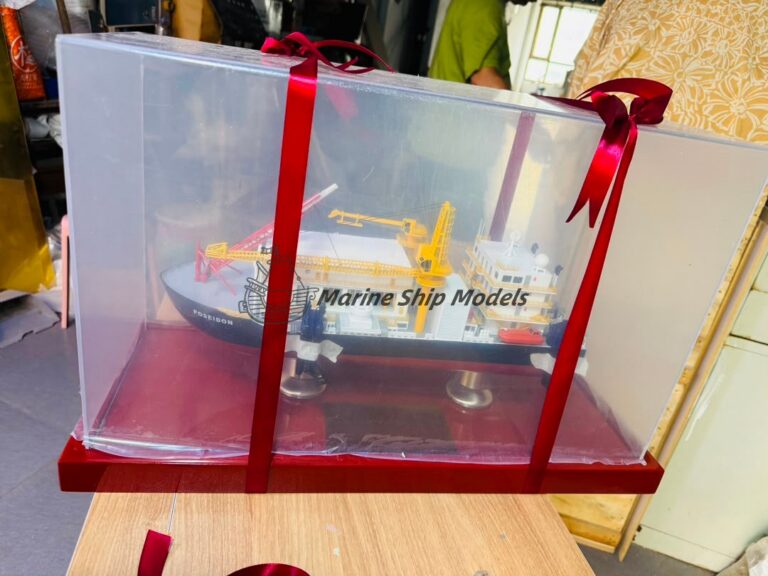
Turn Your Shipbuilding Project Into the Centerpiece of SMM Hamburg
At a major maritime exhibition, every company competes for attention.
Visitors walk through hundreds of stands filled with LED screens, technical brochures, digital animations, engineering drawings and corporate videos. While these tools are valuable, they can quickly begin to look similar.
A detailed physical ship model creates a completely different experience.
Marine Ship Models helps shipyards, shipowners, engineering companies, offshore organizations and maritime brands transform real vessel projects into professional physical scale models for exhibitions, customer meetings, corporate displays and vessel-delivery presentations.
Explore our broader Laivamallit collection to see how different vessel types can be represented in physical scale.
Why Physical Ship Models Work at Maritime Exhibitions
A real ship cannot enter the exhibition hall.
The model can.
A professionally produced vessel model allows visitors to understand the complete ship from a single viewpoint and then examine the design from different angles.
Instead of describing the bow, bridge, deck equipment, superstructure, cranes or cargo areas using only drawings, the sales team can point directly to the model.
This transforms the model into a communication tool.
Marine Ship Models can develop custom models based on available vessel information such as general arrangement drawings, photographs, dimensions, CAD data and other suitable design references.
Our guide on How to Make a Scale Marine Ship Model explains how technical references can be translated into hull structures, decks, paint finishes, details and final presentation.
Ship Models for Shipyards
Shipyards are one of the strongest potential users of exhibition ship models.
A newly designed vessel may still be under construction when an exhibition begins. A recently delivered ship may already be operating on the other side of the world.
A physical model solves both problems.
The shipyard can bring the project directly into the exhibition stand.
A newbuilding model can help demonstrate:
vessel proportions, deck configuration, superstructure design, visible equipment, cargo arrangements, shipowner branding and shipyard capability.
After SMM Hamburg, the same model can move into the shipyard showroom or customer reception area.
For additional industry context, Scales Model also maintains a dedicated external resource on Custom Ship Models for Shipyards, covering newbuilding, delivery and shipyard-presentation applications.
Ship Models for Shipowners
Shipowners can also use models to create stronger fleet presentations.
A flagship ship model immediately gives visitors a physical representation of the fleet.
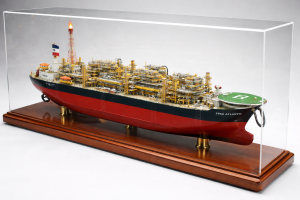
Container operators may present a new generation of large vessels. Bulk operators can showcase important vessel classes. Offshore operators can present specialist working vessels.
Several models can even be displayed together as a physical fleet.
Marine Ship Models also publishes professional content about choosing and planning vessel models in our Professional Guide to Choosing the Right Ship Model.
Commercial Ship Models for SMM
The SMM audience covers almost every major vessel category.
For commercial-shipping exhibitors, our Rahtialuksen mallit resources provide relevant inspiration.
Possible model projects include:
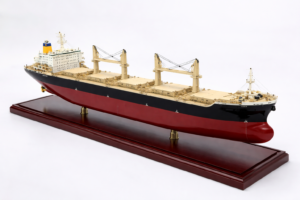
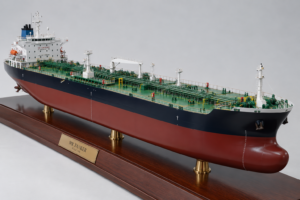
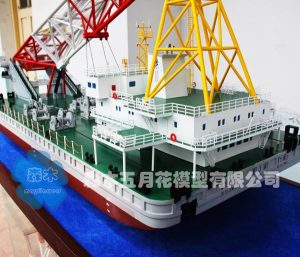
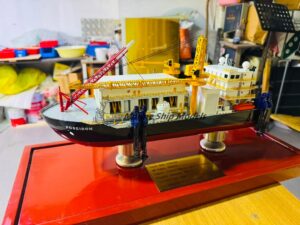
container vessels, bulk carriers, tankers, gas carriers, offshore vessels, tugboats, service vessels and specialist ships.
The most effective exhibition model should not simply look like a general vessel type.
It should look like your vessel.
That means considering ship name, hull colors, corporate identity, visible equipment and vessel-specific structural characteristics.
Exhibition Models as Sales Tools
A physical model can become the visual anchor of the stand.
Visitors notice the model first.
Then questions begin naturally:
What vessel is this?
Who designed it?
Is this your latest newbuilding?
What is the vessel used for?
Which shipyard constructed it?
This gives the sales team a natural opportunity to start a professional conversation.
Marine Ship Models has discussed this wider exhibition trend in our article about how large physical maritime models can become important visual elements in professional exhibition environments.
From Technical Drawings to Physical Presentation
A strong model project starts with good reference information.
Useful materials may include:
GA drawings, side elevations, deck plans, vessel photographs, CAD files, 3D data, company logos and color references.
Marine Ship Models can use this material to plan the physical model according to the intended scale and exhibition environment.
Digital workflows can also play an important role. Our article The Future of Ship Model Making with 3D Printing Technology explores how digital design and modern production processes can support detailed model development.
Scales Model also provides an external reference on CAD & 3D Design for Custom Ship Models.
Protecting the Model for International Exhibitions
Producing the model is only one part of the project.
Fine ship models can contain delicate structures such as:
railings, antennas, radar masts, cranes, lifeboats and deck equipment.
These details must be considered when the model is prepared for transportation.
Marine Ship Models provides a dedicated Toimitus & pakkaus resource covering professional model protection and delivery considerations.
For another perspective, see Scales Model’s external Custom Ship Model Packaging resource.
Make Your Vessel the Conversation Starter
An exhibition booth can contain thousands of words.
A ship model can communicate the project before the visitor reads any of them.
For shipyards, owners, offshore companies and marine-equipment organizations preparing for SMM Hamburg, a custom physical model can transform a vessel project into a memorable visual sales asset.
Marine Ship Models — Bring Your Vessel Into the Exhibition in Scale.
Contact Marine Ship Models to discuss your drawings, photographs, CAD information and exhibition-model requirements.


 Suomi
Suomi  English
  Dansk
Dansk  Deutsch
  한국어
한국어  Français
  Italiano
  Bahasa Indonesia
  日本語
日本語  Polski
  Português do Brasil
  简体中文
简体中文  Türkçe