
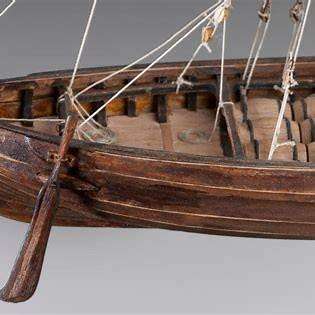
CUSTOM SHIP MODEL MANUFACTURING
AI-Assisted Ship Model Design vs. Traditional Craftsmanship
Artificial intelligence, digital modeling and 3D printing are creating new possibilities for custom ship model manufacturing. At the same time, traditional craftsmanship remains essential for assembly, fine detailing, painting and final presentation.
For shipowners, shipyards, marine engineering companies and corporate buyers, the important question is not whether AI or handcrafting is better. It is how modern design tools and experienced model makers can work together to produce a recognizable, well-proportioned and professionally finished scale model of a real vessel.
This guide compares both approaches and explains how to choose the right production method for a custom marine model.

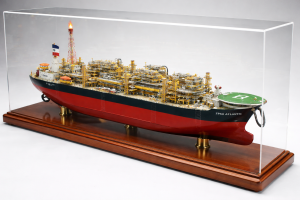
A vessel-specific model combines accurate proportions, equipment placement, finishing and presentation.
1. What Does AI-Assisted Ship Model Design Mean?
AI-assisted design refers to the use of artificial intelligence to support selected tasks within a design workflow. Depending on the tools and source information available, these tasks may include organizing reference material, assisting image analysis, exploring design concepts or supporting parts of a digital modeling process.
AI can be useful when a project involves multiple photographs, technical documents or complex visual references. However, a generated image or AI-produced 3D concept should not automatically be treated as an engineering-accurate representation of a vessel.
Ship model manufacturing still requires reliable dimensions, suitable technical references, design review and physical production planning. The goal is to use technology where it adds value without sacrificing the vessel-specific details that make a model accurate.
Where AI May Help
- Organizing and reviewing visual references
- Supporting early concept exploration
- Assisting selected repetitive digital tasks
- Helping teams compare reference images
Where Human Expertise Is Essential
- Interpreting technical drawings and dimensions
- Checking hull and superstructure proportions
- Resolving conflicting or missing information
- Manufacturing, assembly and finishing details
2. Traditional Craftsmanship: The Foundation of Physical Model Making
Traditional ship model craftsmanship involves the practical skills required to turn a design into a finished physical object. Depending on the project, these skills include shaping the hull, constructing decks and superstructures, fitting small components, preparing surfaces, applying paint and assembling delicate marine details.
Hand finishing is particularly important when the model contains thin railings, ladders, antennas, piping, lifeboats, cranes and other components that require careful positioning. Small alignment errors can become obvious on a professional display model.
Craftsmanship also helps resolve practical challenges that cannot be settled by a digital concept alone, such as component strength, assembly access, surface quality and safe handling.

Hand finishing remains important for small structures, surface quality and the physical integration of components.
3. AI-Assisted Design vs. Traditional Craftsmanship
AI-Assisted and Digital Design
Main role: Support reference analysis, digital planning and selected design tasks.
Strength: Can help organize complex information and accelerate suitable parts of the design workflow.
Limitation: Output may contain incorrect geometry, missing structures or invented details unless checked against reliable references.
Traditional Model Making
Main role: Build, assemble, finish and inspect the physical model.
Strength: Practical experience helps control alignment, surface finish, component fit and visual quality.
Limitation: Manual work can be time-consuming, especially when repeating complex geometry or producing large quantities.
Neither approach guarantees accuracy on its own. Digital tools can produce incorrect geometry, while manual production can also introduce dimensional or assembly errors. Reliable results depend on reference quality, technical checks, production planning and final inspection.
4. Why CAD and 3D Printing Matter in Modern Ship Model Manufacturing
CAD and 3D modeling allow designers to develop geometry and plan components before physical fabrication. When suitable digital information is available, 3D printing can produce selected parts with complex shapes or repeated features. CNC processing may also be useful for appropriate components.
These technologies are different from AI. CAD is used to construct and edit geometry, while 3D printing and CNC are manufacturing methods. AI may assist selected stages, but it does not replace the need for accurate source data or skilled physical assembly.
- CAD design: supports dimensional planning and component relationships.
- 3D printing: can produce suitable complex or small components.
- CNC processing: can support selected accurately machined parts.
- Hand assembly: brings the components together and resolves practical fit.
- Painting and detailing: establish the vessel's finish, markings and identity.
Explore our ship model manufacturing guide for more information about how design and physical production come together.
5. The Most Important Factor Is the Quality of the Reference Material
Whether a project uses AI-assisted tools, CAD, photographs or traditional drafting, the available source information determines how confidently the actual vessel can be reproduced.
- General arrangement (GA) drawings
- Side elevations and deck plans
- Principal vessel dimensions
- Equipment and structural drawings
- Photographs from different viewing angles
- Suitable CAD or 3D files
- Approved vessel colors, names and logos
A 3D file is not automatically accurate simply because it looks detailed. Its dimensions, geometry and completeness should be reviewed against the actual vessel references. Similarly, photographs can clarify visual appearance but may not provide sufficient dimensional information by themselves.
If you already have engineering drawings, visit our Marine Ship Models website to explore custom model solutions and project resources.
6. A Practical Hybrid Workflow: Digital Planning Plus Handcrafting
For many custom ship models, a hybrid approach is more practical than relying exclusively on AI-generated concepts or manual construction. Each stage can use the method best suited to the task.
Stage 1 — Reference Review
Review GA drawings, photographs, dimensions, CAD files and the customer's required display outcome.
Stage 2 — Digital Planning
Establish scale, principal geometry, component positions and the details that need additional references.
Stage 3 — Component Production
Select appropriate fabrication methods for the hull, superstructure and individual parts.
Stage 4 — Assembly and Finishing
Assemble structures, align components, apply paint and add vessel-specific markings.
Stage 5 — Quality Inspection
Compare proportions, visible details, colors and markings with the approved references.
Stage 6 — Presentation
Prepare the model, display base and protective packaging according to its intended use.
This workflow can be adapted to individual projects. A simple corporate gift model may need a different level of detail from a large museum display or a technically complex offshore vessel.
7. Which Approach Is Better for Different Ship Model Projects?
Corporate and Shipyard Display Models
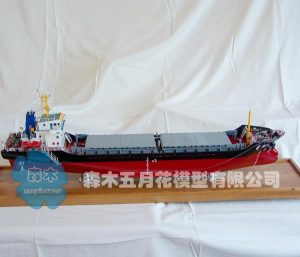
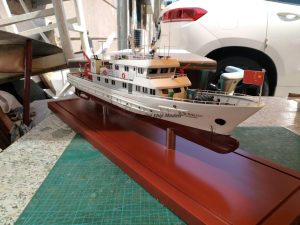
Digital planning helps establish consistent proportions and repeatable components, while skilled finishing ensures the vessel looks professional in an office, showroom or delivery ceremony.
Offshore and Engineering Models
Detailed drawings, CAD and technical review are particularly useful for complex structures and equipment. Manual assembly and inspection remain important for multi-level decks, piping and specialist components.
Batch Production
Digital design can support repeatability across approved components. Sample approval, production controls and consistent finishing are needed to maintain quality across a batch.
Historic and Traditional Vessels
Historical plans, photographs and skilled handcrafting can be essential, especially for rigging, sails, decorative features and period-specific details.
8. How to Evaluate Quality Beyond the Technology Used
When comparing ship model manufacturers, do not rely on claims such as AI-designed, 3D-printed or handmade as proof of quality. Ask how the company checks the design and controls the physical production process.
- Can the manufacturer work from the actual vessel's drawings and photographs?
- Are key dimensions and scale calculations checked before production?
- Can the team identify missing or inconsistent reference details?
- Are material and manufacturing methods selected for the actual components?
- Can the customer review progress or approve important details?
- Are the completed model and its packaging inspected before delivery?
A clear workflow and suitable reference checks are more meaningful than technology claims alone.
Looking for a Custom Ship Model Manufacturer?
Marine Ship Models develops vessel-specific physical models for corporate display, shipyards, maritime projects, exhibitions and private clients. Share your drawings, photographs, vessel dimensions and desired scale so the project requirements can be reviewed.
Request a Custom Model Quote Explore the Manufacturing ProcessFrequently Asked Questions
Can AI create an accurate ship model automatically?
AI may assist selected design tasks, but a reliable vessel-specific model still requires suitable references, dimensional checks, design review, physical manufacturing and final inspection.
Is a 3D-printed ship model better than a handmade model?
Neither method is universally better. 3D printing can suit certain complex components, while handcrafting remains valuable for assembly, surface finishing and fine detailing. The best method depends on the project.
Does AI replace CAD in ship model design?
No. CAD provides tools for constructing and editing geometry. AI may support selected tasks, but CAD and technical references remain important when dimensional control is required.
Can you make a custom model from drawings and photographs?
Drawings and photographs can provide a useful starting point. The manufacturer can review the available information and identify whether additional dimensions or technical details are required.
What should I provide for a custom ship model quotation?
Send the vessel name, available GA drawings or photographs, principal dimensions, preferred model scale or finished length, required quantity, intended application and delivery destination.
 Deutsch
 English
 Dansk
 한국어
 Français
 Italiano
 Suomi
 Bahasa Indonesia
 日本語
 Polski
 Português do Brasil
 简体中文
 Türkçe


