Maritime history is inseparable from the story of human progress. For more than a thousand years, merchant ships have not only carried goods but also ideas, technologies, and cultures across seas and continents. From the wooden cogs of the medieval north to the steel-hulled ocean liners of the early 20th century, the development of merchant vessels mirrors the growth of global trade and the rise of modern civilization.
This article traces the fascinating journey of merchant ship design and technology between the year 800 and 1930—a period that encompasses the Middle Ages, the Age of Discovery, the Industrial Revolution, and the dawn of modern shipping.
Merchant Ships of the Middle Ages (c. 800–1400)
Viking Knarr: The Northern Traders
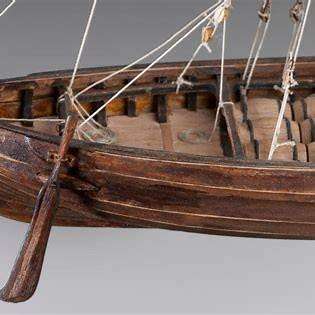
In the early medieval period, seafaring in Northern Europe was dominated by the Vikings. While the longship is often remembered as their vessel of war, another design was equally important: the Knarr. This was the Viking merchant ship, broad in hull, single-masted, and carrying a square sail. Unlike the long, narrow warships designed for raiding, the Knarr prioritized cargo capacity. With its deep draft and wide body, it could carry livestock, timber, wool, grain, and even passengers across the North Atlantic.
The Knarr played a pivotal role in connecting Scandinavia with distant colonies in Iceland, Greenland, and even Vinland (present-day Newfoundland). These ships were proof that medieval Europeans could conduct transoceanic voyages centuries before Columbus.
Mediterranean Galleys: The Engines of Commerce
Further south, the Mediterranean world had its own merchant tradition. Italian city-states such as Venice, Genoa, and Pisa built galleys, long, narrow ships powered by both oars and sails. Galleys were versatile: they could transport high-value cargo like silk and spices, and when necessary, they could also serve as warships to defend merchant convoys.
In the relatively calm waters of the Mediterranean, galleys proved efficient, though they were less suited for the rough Atlantic. Their hybrid propulsion system meant that trade could continue even when the wind was not favorable—a great advantage for time-sensitive commerce.
The Cog: Northern Europe’s Workhorse
By the 10th century, another revolutionary ship emerged in Northern Europe: the cog. With a single mast and square sail, a flat bottom, and high sides, the cog was sturdy, reliable, and capable of carrying large cargoes. Its deep hold made it perfect for the expanding trade of the Hanseatic League, which dominated Baltic and North Sea commerce.
Cogs became the backbone of medieval shipping. From timber and salt to beer and furs, they carried goods between ports such as Lübeck, Bruges, and London. Their influence lasted for centuries and laid the foundation for larger multi-masted ships that would follow.
The Age of Discovery (c. 1400–1700)
As Europe entered the Renaissance, an insatiable hunger for new trade routes and exotic goods pushed ship design to new levels.
The Caravel: Small but Mighty
Portuguese explorers pioneered the caravel, a small but highly maneuverable vessel with lateen (triangular) sails. Caravels could tack against the wind and explore coastlines with ease. Though limited in cargo capacity, they were perfect for exploration.
With caravels, explorers such as Bartolomeu Dias and Vasco da Gama rounded Africa and reached India. Christopher Columbus also used caravels, alongside larger ships, to reach the New World.
The Carrack (Nau): The Ocean Trader
By the 15th century, trade demanded bigger vessels. Enter the carrack, or “nau,” a massive ship with three or four masts, high castles at the bow and stern, and vast cargo holds. First developed by Genoese shipwrights and perfected by the Portuguese, carracks were the first true ocean-going merchant ships.
They enabled the transport of spices, gold, and silver across oceans, connecting Europe with Asia and the Americas. These ships laid the foundation for global maritime empires.
The Galleon: Power and Commerce Combined
In the 16th century, the galleon evolved from the carrack. Longer, sleeker, and more heavily armed, galleons were both merchant ships and warships. Spain’s famed treasure fleets relied on galleons to carry silver from the Americas across the Atlantic.
For nearly two centuries, galleons dominated transoceanic trade. They were symbols of wealth, power, and global connectivity.
Merchant Ships of the Industrial Revolution (c. 1700–1850)
By the 18th century, maritime trade had reached unprecedented scales. Empires relied on merchant fleets to sustain colonies, and new designs emerged to keep pace.
East Indiaman: The Giant Traders
"(《世界人权宣言》) East Indiaman was the workhorse of European trading companies such as the British East India Company and the Dutch VOC. These were large, three- or four-masted sailing ships built to carry valuable cargo over long distances.
Heavily armed to deter pirates, they transported tea, porcelain, silk, cotton, and spices between Asia and Europe. Their imposing size and ornate design made them iconic symbols of colonial commerce.
Clippers: The Race for Speed
In the mid-19th century, the clipper ship redefined maritime speed. With tall masts, vast expanses of sail, and streamlined hulls, clippers could reach extraordinary speeds.
They became famous in the China tea trade, where the first ship to return to London fetched the highest profits. Clippers also played roles in the California Gold Rush, transporting miners and supplies at record pace. Though their heyday was brief—supplanted by steamships—they remain among the most romanticized sailing ships in history.
Slave Ships: A Dark Chapter
Not all merchant ships carried honorable cargo. During the transatlantic slave trade, many vessels were repurposed or built to carry enslaved Africans under horrific conditions. These ships were crowded, unsanitary, and inhumane, a stark reminder that maritime history includes both triumphs and tragedies.
The Steam and Steel Era (c. 1830–1930)
The Industrial Revolution transformed shipping more dramatically than any period before. Steam engines, iron hulls, and later steel construction changed both the look and the function of merchant ships forever.
Paddle Steamers
The first steamships appeared in the early 19th century, using paddle wheels mounted on the sides or stern. While inefficient for long voyages, they were excellent for rivers and coastal trade. The sight of smoke rising from their funnels marked the beginning of a new age.
Screw Steamers
By the mid-1800s, paddle wheels gave way to the screw propeller, which was more efficient, especially in rough seas. Screw steamers quickly spread across the globe, revolutionizing transoceanic trade.
Iron and Steel Hulls
Wooden ships, once the backbone of maritime history, gradually disappeared as iron and later steel hulls proved stronger, more durable, and capable of supporting much larger vessels. This innovation greatly increased cargo capacity and safety.
Ocean Liners
The late 19th and early 20th centuries saw the rise of the ocean liner—giant passenger and cargo ships that crossed the Atlantic on fixed schedules. Liners such as the Lusitania, Mauretania, and the ill-fated Titanic represented the pinnacle of engineering and luxury.
Freighters
At the same time, purpose-built cargo steamers emerged, designed solely for freight. These freighters laid the foundation for the modern container ship industry. They were practical, efficient, and became the backbone of global trade by the early 20th century.
Conclusion: A Thousand Years of Progress
From the humble Viking Knarr to the towering steel liners of the 20th century, merchant ships evolved constantly to meet the demands of trade, exploration, and empire. Each design reflected the economic, technological, and cultural needs of its time.
- In the Middle Ages, cogs and galleys supported regional commerce.
- During the Age of Discovery, caravels, carracks, and galleons opened new trade routes.
- In the Industrial era, East Indiamen and clippers carried goods across oceans with speed and style.
- Finally, steamships, iron freighters, and liners ushered in the modern age of shipping.
By 1930, the age of sail was over, but the legacy of a thousand years of shipbuilding innovation remained. The story of merchant ships is not only about vessels—it is the story of globalization itself, of how humanity connected across seas to build the modern world.



 简体中文
简体中文  English
  Dansk
Dansk  Deutsch
  한국어
한국어  Français
  Italiano
  Suomi
Suomi  Bahasa Indonesia
  日本語
日本語  Polski
  Português do Brasil
  Türkçe