
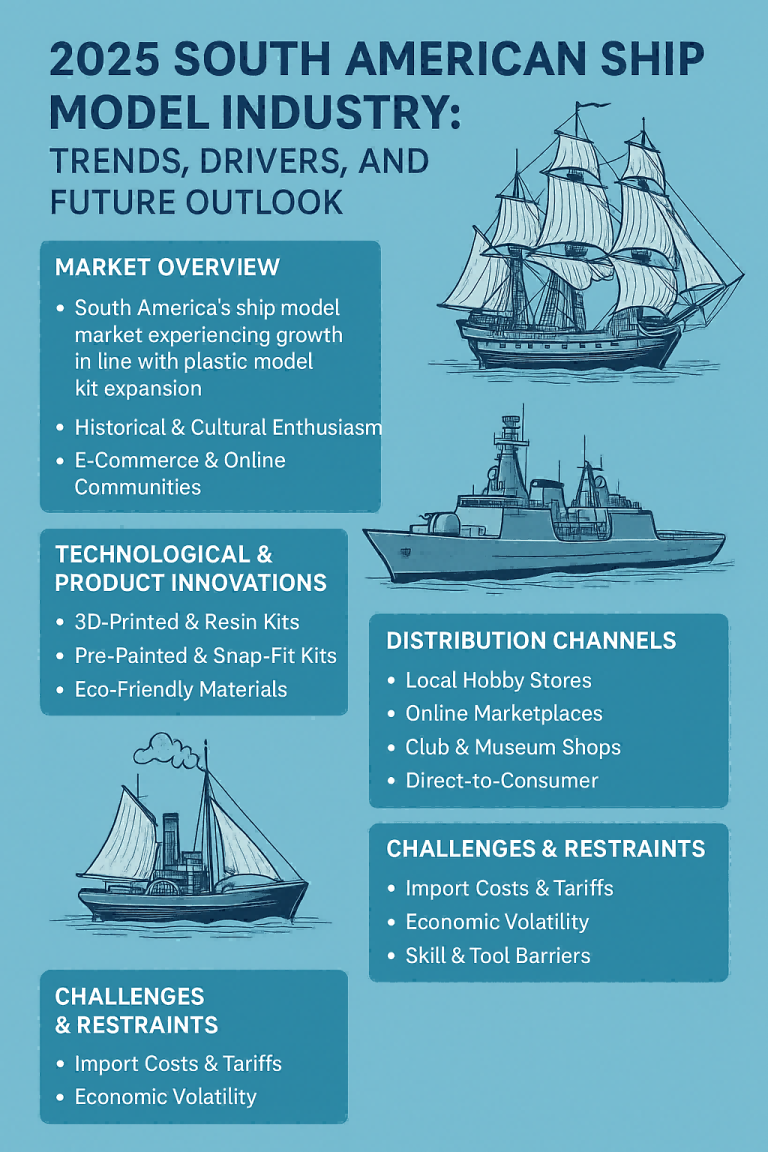
As hobbyists in South America continue to embrace model building, the ship model segment has seen renewed vitality in 2025. While precise regional figures are scarce, broader data on plastic model kits and Latin American hobby markets suggest a healthy growth trajectory. Below, we explore the key forces shaping the South American ship model industry this year.
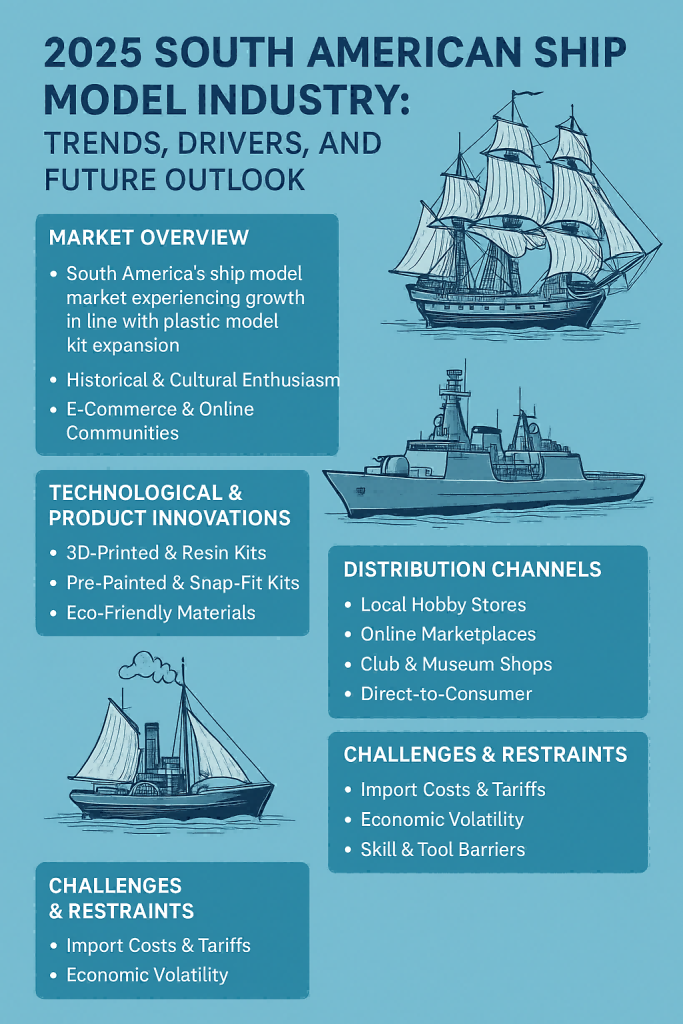
1. Market Overview
- Regional Growth Context
Latin America’s plastic model kits market is experiencing stable growth, driven by rising disposable incomes and a deep cultural interest in historical and military subjects. Within this broader hobby sector, ship models—ranging from historic sailing vessels to modern naval vessels—constitute a significant niche, favored by collectors and history enthusiasts alike. - Global Benchmarks
Globally, the model kits market is projected to grow at a CAGR of around 3–5% from 2024 through 2032 South America is expected to mirror this pace, with local hobby shops and online retailers steadily expanding their ship model offerings.
2. Key Growth Drivers
- Historical & Cultural Enthusiasm
- South America’s rich maritime heritage—from colonial galleons to 20th-century naval ships—fuels collector interest.
- Educational exhibits and naval anniversaries (e.g., bicentennials of independence-era navies) drive special-edition kit releases.
- E-Commerce & Online Communities
- Platforms like Mercado Libre and hobby-specific e-stores now feature extensive ship model catalogs, including imported brands (Tamiya, Revell) and local artisans’ resin kits.
- Facebook groups, WhatsApp communities, and YouTube channels dedicated to scale modeling foster peer-to-peer knowledge sharing and kit reviews, lowering the barrier to entry for newcomers.
- Rising Disposable Income & Leisure Spending
- Economic improvements in Brazil, Chile, and Argentina have translated into increased discretionary spending on hobbies and collectibles.
- The mid-career demographic (ages 30–55) increasingly views model building as a stress-relieving pursuit, boosting demand for more intricate ship kits.
3. Technological & Product Innovations
- 3D-Printed & Resin Kits
- Small local workshops and online makers leverage 3D printing to offer ultra-detailed, limited-run ship models—from WWII destroyers to modern frigates—at competitive prices.
- Pre-Painted & Snap-Fit Kits
- To appeal to beginners, manufacturers are releasing snap-together ship models with pre-painted components, reducing assembly time and the need for specialized tools or paints.
- Eco-Friendly Materials
- A handful of South American brands are experimenting with biodegradable plastics and water-soluble support materials for 3D printing, addressing sustainability concerns among younger hobbyists.
4. Distribution Channels
| Channel | Features & Trends |
|---|---|
| Local Hobby Stores | Host in-person workshops; stock core brands and paints. |
| Online Marketplaces | Offer wide selection, customer reviews, flash sales, and bundles. |
| Club & Museum Shops | Sell exclusive, commemorative ship kits tied to exhibitions. |
| Direct-to-Consumer | Artisan modelers sell limited editions via Instagram and Etsy. |
5. Challenges & Restraints
- Import Costs & Tariffs
High duties on imported kits can inflate prices by 20–30%, pushing some hobbyists toward lower-cost alternatives or DIY 3D-printing solutions. - Economic Volatility
Fluctuating exchange rates in Argentina and Brazil can disrupt both retail pricing and the profitability of local kit producers. - Skill & Tool Barriers
Traditional ship models often require advanced painting, rigging, and weathering techniques, which can intimidate beginners and limit market expansion.
6. Future Outlook & Opportunities
- Growing Entry-Level Segment
As snap-fit and pre-painted options proliferate, the pool of C is set to expand, creating upsell opportunities for advanced kits and accessories. - Hybrid Digital-Physical Experiences
Augmented reality (AR) apps that overlay rigging instructions onto physical hulls are emerging as novel teaching aids, likely to gain traction in 2025–2026. - Collaborations & Limited Editions
Partnerships between South American historical societies and model manufacturers will drive special-edition runs tied to naval anniversaries, boosting collector enthusiasm.
결론
In 2025, South America’s ship model industry stands at the intersection of tradition and innovation. Bolstered by cultural passion, improving economic conditions, and digital community growth, the market is poised for steady expansion. Manufacturers and retailers who balance high-detail offerings with accessible entry points—and who navigate import challenges creatively—will lead the pack in this flourishing niche.



 한국어
한국어  English
  Dansk
Dansk  Deutsch
  Français
  Italiano
  Suomi
Suomi  Bahasa Indonesia
  日本語
日本語  Polski
  Português do Brasil
  简体中文
简体中文  Türkçe