

By MarineShipModels
The ship model making industry has evolved far beyond a traditional hobby or decorative craft. In 2026, it stands at the intersection of art, engineering, technology, and luxury branding. As global maritime industries expand and consumer preferences shift toward personalization and premium experiences, ship models are gaining renewed relevance across private, commercial, and institutional markets.
På MarineShipModels, we have witnessed firsthand how this niche industry is transforming. From handcrafted museum-quality replicas to digitally enhanced production methods, the future of ship model making is both innovative and promising.
This article explores the key trends shaping the ship model industry in 2026 and what they mean for collectors, businesses, and manufacturers worldwide.

1. Rising Demand for Customization and Personalization
One of the most significant trends in 2026 is the increasing demand for fully customized ship models. Clients today are no longer satisfied with generic, mass-produced pieces—they want models that reflect their identity, achievements, or brand story.
According to industry observations, customization has become a core purchasing driver, with clients requesting:
- Exact replicas of their own vessels
- Personalized scale adjustments
- Custom display cases and lighting
- Branding elements for corporate use
This trend is especially strong among:
- Shipping companies showcasing fleet assets
- Yacht owners commemorating their vessels
- Maritime museums and institutions
- Real estate developers and luxury offices
At MarineShipModels, our philosophy has always been simple: if you provide us with a blueprint or image, we can bring it to life. This customization-driven approach is now becoming the industry standard.
2. Premiumization of the Ship Model Market
Similar to trends seen in luxury industries, the ship model sector is undergoing premiumization. Instead of competing on price, companies are competing on:
- Craftsmanship
- Material quality
- Historical accuracy
- Artistic value
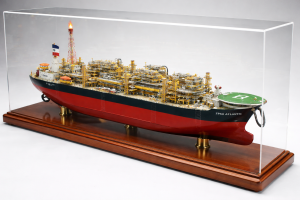
High-end clients are increasingly commissioning museum-grade models made from hardwood, brass, and advanced composites. These models are not just decorative—they are investment pieces, storytelling tools, and brand assets.
This aligns with broader maritime trends, where the global marine vessel market continues to grow steadily, driven by fleet expansion and modernization.
As real ships become more advanced and valuable, the demand for equally sophisticated scale models naturally follows.
3. Integration of 3D Printing and Digital Manufacturing
Technology is revolutionizing how ship models are designed and produced. In 2026, 3D printing and digital modeling are no longer experimental—they are essential tools.
Key advantages include:
- Faster prototyping
- Greater design flexibility
- Ability to replicate complex geometries
- Cost-efficient small-batch production
MarineShipModels has already begun integrating 3D printing into its workflow, allowing for more intricate designs and faster turnaround times.
This technological shift is particularly important for:
- Industrial clients needing accurate technical models
- Shipbuilders presenting new vessel concepts
- Designers showcasing innovative maritime solutions
The combination of traditional craftsmanship and digital precision is defining the next generation of ship models.
4. Influence of the Global Maritime Industry
The ship model industry does not exist in isolation—it closely mirrors trends in the broader maritime sector.
In 2026, key maritime developments include:
- Strong demand for commercial vessels (90% market share)
- Increased investment in fleet renewal
- Adoption of alternative fuels and greener technologies
- Modular shipbuilding approaches
These trends directly impact ship models. For example:
- New ship designs require updated model representations
- Green ships inspire eco-themed models
- Modular shipbuilding increases demand for sectional models
As the maritime industry evolves, ship models serve as visual representations of innovation, helping companies communicate complex designs to stakeholders.
5. Growth of the Luxury Yacht Model Segment
One of the fastest-growing segments in 2026 is custom yacht models.
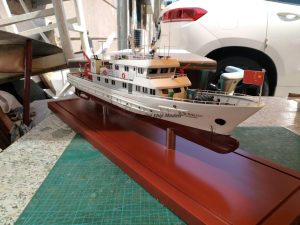
Luxury yacht owners are commissioning highly detailed replicas of their vessels for:
- Personal display
- Marketing and sales presentations
- Commemorative purposes
Current yacht design trends influencing model demand include:
- Explorer and expedition yachts
- Eco-friendly hybrid propulsion vessels
- Large-scale superyachts with advanced features
This segment is particularly resilient because it targets high-net-worth individuals, who remain less affected by economic fluctuations.
For companies like MarineShipModels, this presents a major opportunity to expand into the luxury lifestyle market.
6. Expansion Through Cross-Border E-Commerce
Digital transformation has opened global markets for ship model manufacturers.
Today, companies can:
- Sell directly to international clients
- Showcase portfolios online
- Accept multi-currency payments
- Offer worldwide shipping
MarineShipModels already serves clients in over 80 countries, demonstrating the power of cross-border e-commerce in this niche industry.
Key growth drivers include:
- Increased global interest in maritime culture
- Rising disposable income in emerging markets
- Online platforms connecting niche buyers and sellers
This globalization is transforming ship model making from a local craft into a truly international business.
7. Applications Beyond Collecting
Ship models are no longer limited to hobbyists or collectors. In 2026, their applications have expanded significantly:
Corporate Use
- Office displays for branding
- Trade show exhibits
- Investor presentations
Educational Use
- Maritime training institutions
- Engineering demonstrations
- Historical education
Commercial Use
- Shipbuilders showcasing designs
- Real estate developers creating themed displays
- Cruise companies promoting vessels
This diversification is increasing demand and creating new revenue streams for manufacturers.
8. Sustainability and Material Innovation
Sustainability is becoming an important consideration in the ship model industry.
As the maritime sector shifts toward greener technologies, model makers are also adopting:
- Eco-friendly materials
- Low-emission production processes
- Recyclable components
This trend aligns with broader environmental regulations and consumer expectations.
Additionally, new composite materials offer:
- Improved durability
- Better weight-to-detail ratios
- Enhanced visual realism
These innovations are helping manufacturers balance quality, cost, and environmental responsibility.
9. Challenges Facing the Industry
Despite strong growth potential, the ship model industry faces several challenges:
Lack of Standardization
There are limited global standards for quality and certification, leading to inconsistent products.
Intellectual Property Issues
Counterfeiting and design copying remain concerns, especially in digital manufacturing.
Skilled Labor Shortage
High-quality model making requires craftsmanship that is becoming increasingly rare.
Market Fragmentation
The industry is highly niche, with many small players competing globally.
Addressing these challenges will require stronger branding, innovation, and customer trust.
10. The Role of Branding and Storytelling
In 2026, success in the ship model industry is not just about building models—it’s about telling stories.
Customers are buying:
- Heritage
- Engineering excellence
- Personal memories
- Brand identity
MarineShipModels differentiates itself by combining:
- 20+ years of craftsmanship
- Global project experience
- Custom design expertise
- Advanced production capabilities
Strong branding transforms ship models from products into experiential assets.
Conclusion: A Promising Future for Ship Model Making
The ship model making industry in 2026 is entering a new era defined by:
- Customization
- Technological innovation
- Globalization
- Luxury positioning
As maritime industries evolve and consumer expectations rise, ship models will continue to play a vital role in storytelling, design visualization, and cultural preservation.
På MarineShipModels, we believe the future lies in combining tradition with innovation—delivering models that are not only visually stunning but also deeply meaningful.
Whether for collectors, corporations, or maritime professionals, ship models are no longer just replicas—they are symbols of progress, identity, and craftsmanship.
 Dansk
 English
 Deutsch
 한국어
 Français
 Italiano
 Suomi
 Bahasa Indonesia
 日本語
 Polski
 Português do Brasil
 简体中文
 Türkçe


