How to Turn GA Drawings into an Accurate Scale Ship Model
Creating an accurate scale ship model involves much more than reducing
the size of a vessel. Every model must translate the original ship's
proportions, structural arrangement, and recognizable details into a
much smaller physical form. For commercial vessels, luxury yachts,
passenger ships, and museum projects, General Arrangement (GA) drawings
provide an important starting point for this process.
A professional ship model manufacturer uses engineering drawings,
vessel dimensions, reference photographs, and digital design tools
to develop a model that reflects the original vessel as closely as
the available information and selected scale allow.
This guide explains how GA drawings are used to develop custom scale
ship models, what information is needed, and how buyers can prepare
their projects for an accurate quotation.
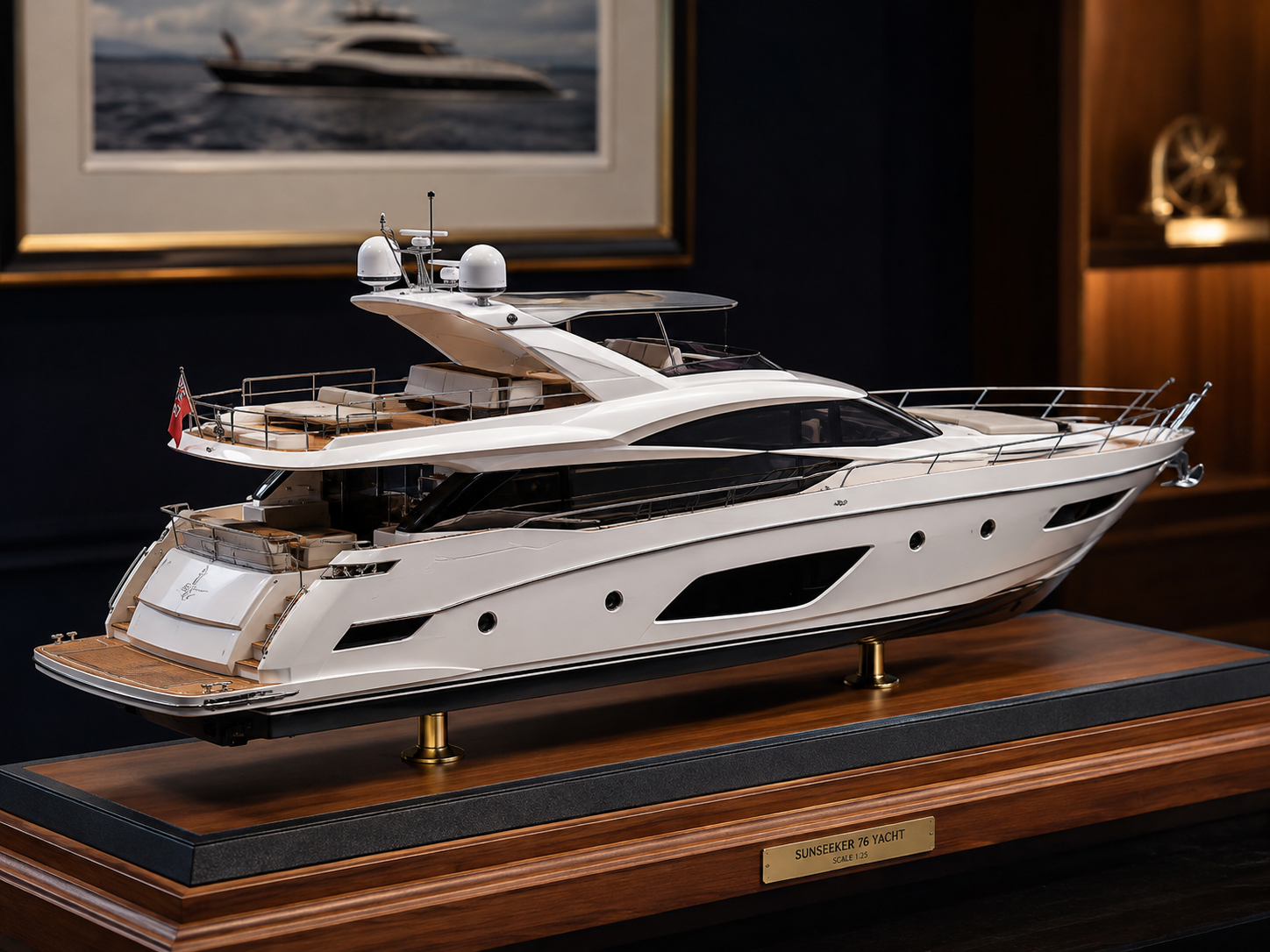 Custom ship models translate vessel dimensions and design references
into detailed physical display models.
1. What Are GA Drawings in Ship Model Manufacturing?
GA stands for General Arrangement. A GA drawing illustrates the
principal layout of a vessel, including the arrangement of decks,
accommodation spaces, bridge, machinery spaces, cargo areas, and
other major features, depending on the vessel type and drawing scope.
For scale model production, the GA drawing helps establish the relative
positions and dimensions of visible structures. It can show where the
bridge is located, how the decks are arranged, the position of the
funnels, and how the vessel's main sections relate to one another.
However, a GA drawing does not always contain every dimension needed
to reconstruct a vessel's exterior accurately. Hull lines, elevations,
detailed deck plans, equipment drawings, and photographs may also
be required, especially for complex hull shapes and highly detailed
custom ship models.
Common Reference Materials
- GA drawings: Main deck arrangements and superstructure layout.
- Hull lines or hull plans: Hull contours, bow shape, stern shape, and cross-sections.
- Profile and elevation drawings: Heights and exterior proportions.
- Deck plans: Deck layouts, equipment positions, and walkways.
- Photographs: Colors, markings, railings, fittings, and details not fully represented in drawings.
- 3D CAD files: Additional geometric references when the files are suitable for model development.
2. Step One: Verify the Vessel and Its Principal Dimensions
Before developing the model, the manufacturer should confirm the
vessel's identity and principal dimensions. These may include overall
length, beam, height, draft, and other dimensions relevant to the
model's intended appearance.
It is important to distinguish between overall length and other
length measurements used in vessel documentation. Using the wrong
reference dimension can affect the finished model's proportions
and the expected model length.
Buyers should provide the vessel name, vessel type, and any known
principal dimensions. If the project concerns a particular sister
vessel or a ship that has undergone modifications, current photographs
can help identify differences between the available plans and the
actual vessel.
3. Step Two: Calculate the Correct Scale and Model Size
Scale determines the relationship between the full-size vessel and
the model. For example, a scale of 1:200 means that one unit on the
model represents 200 of the same units on the actual vessel.
Model length = Actual vessel length ÷ Scale denominator
| Actual Vessel Length |
Model Scale |
Approximate Model Length |
| 100 m |
1:100 |
100 cm |
| 150 m |
1:200 |
75 cm |
| 200 m |
1:200 |
100 cm |
| 300 m |
1:300 |
100 cm |
The ideal scale depends on the vessel's dimensions, the intended
display location, the desired level of detail, and the project
budget. A larger model generally offers more space for visible
details, but it also requires more materials, labor, and protective
packaging.
The manufacturer should confirm the finished model dimensions
before production, including whether the quoted length refers
to the vessel model alone or includes any additional protruding
components.
4. Step Three: Convert Engineering Drawings into a Digital Model
After the drawings and dimensions have been reviewed, the design
team develops the geometry needed for manufacturing. Depending on
the available source materials, this may involve building a new
digital model, adapting an existing CAD file, or reconstructing
the exterior from multiple drawings and photographs.
The design process focuses on maintaining the vessel's proportions
and the relationship between its principal structures. The hull,
superstructure, decks, bridge, funnels, and other major features
must be scaled consistently.
A supplied 3D file can be useful, but file availability alone does
not guarantee that it is suitable for production. The geometry
should be checked for distortion, missing components, incorrect
proportions, and inconsistencies with the vessel references.
When a supplied file cannot reliably represent the vessel, the
design team may need to rebuild or correct the relevant geometry
using engineering drawings and verified photographs.
5. Step Four: Add Details That Define the Vessel
The major dimensions establish the model's overall shape, but
recognizable details help distinguish one vessel from another.
These details vary according to the type of ship and the selected
scale.
Hull and Superstructure
The hull profile, bow and stern contours, deck levels, bridge
arrangement, and funnel positions provide the foundation for
an accurate exterior representation.
Deck Equipment and Fittings
Depending on the scale and available references, the model may
include lifeboats, cranes, anchors, winches, antennas, navigation
equipment, railings, ladders, and other visible fittings.
Colors, Logos, and Vessel Identification
Exterior paint schemes, company logos, funnel markings, vessel
names, and port of registry can be essential to a ship's identity.
Clear photographs and written confirmation help reduce uncertainty
during finishing.
Not every full-size component can be reproduced at its original
relative size. Fine details may need to be adapted to the model
scale to remain visible, durable, and practical to manufacture.
6. Step Five: Choose Suitable Materials and Manufacturing Methods
A professional scale ship model may combine several fabrication
methods rather than relying on one material or process. Depending
on the vessel design, the manufacturer may use 3D printing,
ABS components, wood, and other appropriate materials.
Complex geometries can benefit from digital fabrication, while
manual assembly and finishing help refine the final appearance.
The appropriate approach depends on the model's dimensions,
component shapes, required detail, and intended use.
For a presentation model, manufacturing quality includes more
than the accuracy of the digital file. Assembly alignment,
surface preparation, painting, lettering, and final inspection
all contribute to the finished product.
7. Step Six: Review the Design Before Production
Reviewing the design before fabrication helps confirm that the
model reflects the agreed project requirements. Depending on
the workflow, the manufacturer may share drawings, design views,
or progress images for review.
Buyers should pay particular attention to:
- Overall length, beam, height, and vessel proportions.
- Deck levels and the arrangement of the superstructure.
- Funnel locations, lifeboats, cranes, and major equipment.
- Hull color, waterline, logos, vessel name, and port of registry.
- Any vessel-specific modifications or details that differ from standard plans.
If a feature is missing or incorrect, provide the relevant drawing
or photograph and identify the location clearly. This makes it
easier to assess the requested change before the affected parts
are manufactured.
8. Step Seven: Assembly, Painting, and Final Quality Checks
After the design and components have been prepared, the model
proceeds through assembly, surface finishing, painting, and
installation of the smaller details.
Final checks should cover the model's overall proportions,
component alignment, finish quality, markings, and stability.
The finished model can then be prepared for display and transport
according to the project requirements.
Depending on the order, presentation accessories may include
a display base, engraved nameplate, acrylic display case, and
protective transport packaging. Confirm the included items
and shipping arrangements in the quotation.
9. What If You Do Not Have Complete GA Drawings?
A missing GA drawing does not always prevent a custom ship model
from being produced. The manufacturer may be able to reconstruct
the vessel's exterior using photographs, public vessel information,
and other reliable references.
For the best possible result, provide photographs from multiple
angles, including the bow, stern, port side, starboard side,
and elevated views of the decks. Close-up photographs of the
bridge, funnels, deck equipment, and distinctive markings are
also helpful.
However, photo-based reconstruction may require additional
design work, and some hidden or undocumented dimensions may
need to be estimated. The achievable accuracy depends on the
quantity, clarity, and consistency of the references.
If only a few photographs are available, ask the manufacturer
to identify any important missing information before confirming
the final scope and price.
10. How to Request a Custom Scale Ship Model Quotation
Providing clear project information helps a manufacturer assess
the design workload, production requirements, and appropriate
model scale. For a more useful initial quotation, prepare:
- Vessel name and type.
- Actual vessel dimensions, if available.
- GA drawings, hull plans, deck plans, or other technical references.
- Photographs showing the vessel from different angles.
- Preferred model scale or approximate finished length.
- Intended use, such as office display, corporate gift, or museum exhibit.
- Required display accessories and destination country.
- Target budget and expected delivery date.
These details help the manufacturer determine whether the project
can use existing digital references or requires new design work.
They also help clarify what should be included in the final quotation.
Conclusion: Accurate Ship Models Start with Reliable References
GA drawings provide a valuable foundation for developing accurate
custom scale ship models, but the best results usually come from
combining engineering information with suitable hull plans,
photographs, careful digital design, and skilled finishing.
By confirming the vessel's dimensions, selecting an appropriate
scale, reviewing important details, and agreeing on the production
scope, buyers can establish a clearer path from the original
vessel to a finished display model.
Request a Custom Ship Model Quotation
Marine Ship Models develops custom scale ship models for shipping
companies, shipowners, yacht projects, corporate presentations,
and maritime displays. We can review GA drawings, other engineering
references, or available vessel photographs to assess your project.
Send us the vessel name, available drawings or photographs,
preferred model length, and destination country to discuss
your requirements and receive a project quotation.
Contact Marine Ship Models About Your Project



 한국어
 English
 Dansk
 Deutsch
 Français
 Italiano
 Suomi
 Bahasa Indonesia
 日本語
 Polski
 Português do Brasil
 简体中文
 Türkçe