
3D Printed Ship Models vs. Handcrafted Display Models: Which Is Better for Accuracy and Detail?
Modern ship model manufacturing combines digital design, precision fabrication, and traditional craftsmanship. While 3D printing has made it easier to reproduce complex ship structures, handcrafted assembly and finishing remain essential for producing professional display models. The best approach depends on the vessel, required scale, level of detail, intended use, and project budget.
1. What Is a 3D Printed Ship Model?
A 3D printed ship model is manufactured by converting a digital 3D design into physical components through additive manufacturing. Depending on the printing technology and material, the process can reproduce complex shapes, small structural components, and geometries that are difficult to make using conventional methods.
For custom ship models, 3D printing is particularly useful for producing selected components such as deck fittings, equipment housings, funnels, structural details, and other geometrically complex parts. It can also support the production of hull sections and prototype components when the model design and printing requirements are suitable.
However, a printed component is not automatically an accurate scale model. The quality of the original digital design, dimensional control, surface preparation, assembly, and painting all influence the final result.
2. What Is a Handcrafted Display Ship Model?
A handcrafted display ship model is built through a combination of precision fabrication, manual assembly, surface finishing, painting, and detailed fitting. Depending on the vessel and project requirements, manufacturers may use ABS, wood, 3D printed components, and other appropriate materials.
Rather than relying on a single manufacturing method, professional handcrafted models often combine multiple processes. Digital drawings establish the main dimensions and geometry, fabricated components form the structure, and skilled model makers complete the details that create a convincing, realistic appearance.
This approach is particularly suitable for corporate display models, shipowner gifts, shipping company offices, yacht showrooms, and maritime museums that require a polished, presentation-ready product.
3. 3D Printing vs. Handcrafted Ship Models: Key Differences
| Comparison | 3D Printed Models | Handcrafted Display Models |
|---|---|---|
| Manufacturing method | Additive manufacturing of digitally designed components | A combination of digital fabrication, manual assembly, and finishing |
| Complex geometry | Useful for intricate shapes and integrated components | Can accommodate complex structures through multiple fabrication methods |
| Surface finish | May require sanding, filling, priming, and painting | Can receive extensive manual surface preparation and finishing |
| Fine details | Limited by printer resolution, material, and component size | Small details can be individually fabricated and installed where practical |
| Customization | Digital geometry can be revised before production | Digital revisions can be combined with hands-on adjustments |
| Best applications | Complex components, prototypes, and selected model structures | Premium display models, corporate gifts, and detailed presentation pieces |
Neither method guarantees superior accuracy on its own. A well-designed 3D printed component can be highly precise, while a handcrafted model can reproduce details that require several different fabrication techniques. The manufacturing plan should be selected according to the specific vessel and the intended display standard.
4. Why Engineering Drawings Matter More Than the Manufacturing Method
For a professional custom ship model, accuracy begins with reliable source information. General Arrangement (GA) drawings, hull lines, deck plans, elevations, and detailed photographs help establish the vessel's proportions, layout, and recognizable features.
When suitable source drawings are available, the design team can determine the model's principal dimensions and scale the relevant structures proportionally. This provides a consistent foundation for the hull, superstructure, decks, funnels, lifeboats, and other visible components.
When complete drawings are unavailable, photographs from different angles can help reconstruct the vessel. However, some hidden dimensions and structural details may need to be estimated, so the achievable level of fidelity depends on the available reference material.
Learn more about the role of technical drawings in custom ship model design and production .
5. Surface Finishing and Small Details Make a Major Difference
The quality of a display ship model is not determined by its hull alone. Railings, antennas, navigation equipment, deck machinery, windows, lifeboats, markings, and paint boundaries all contribute to its overall appearance.
Depending on the scale, some components may be too small to reproduce exactly as they appear on the full-size vessel. Model makers must therefore balance dimensional accuracy, visual clarity, structural strength, and manufacturing feasibility.
Printed parts may need careful post-processing to remove visible layer lines or support marks. Hand-fabricated parts also require precise fitting and finishing. In both cases, inspection and careful assembly are essential to achieving a consistent result.
6. Which Method Is Better for Different Ship Model Projects?
Commercial Vessel and Shipping Company Models
Container ships, bulk carriers, tankers, and passenger vessels often contain many repetitive structures alongside distinctive vessel-specific details. A hybrid manufacturing approach can combine digitally produced components with manual assembly and finishing to create a professional office or presentation model.
Luxury Yacht Models
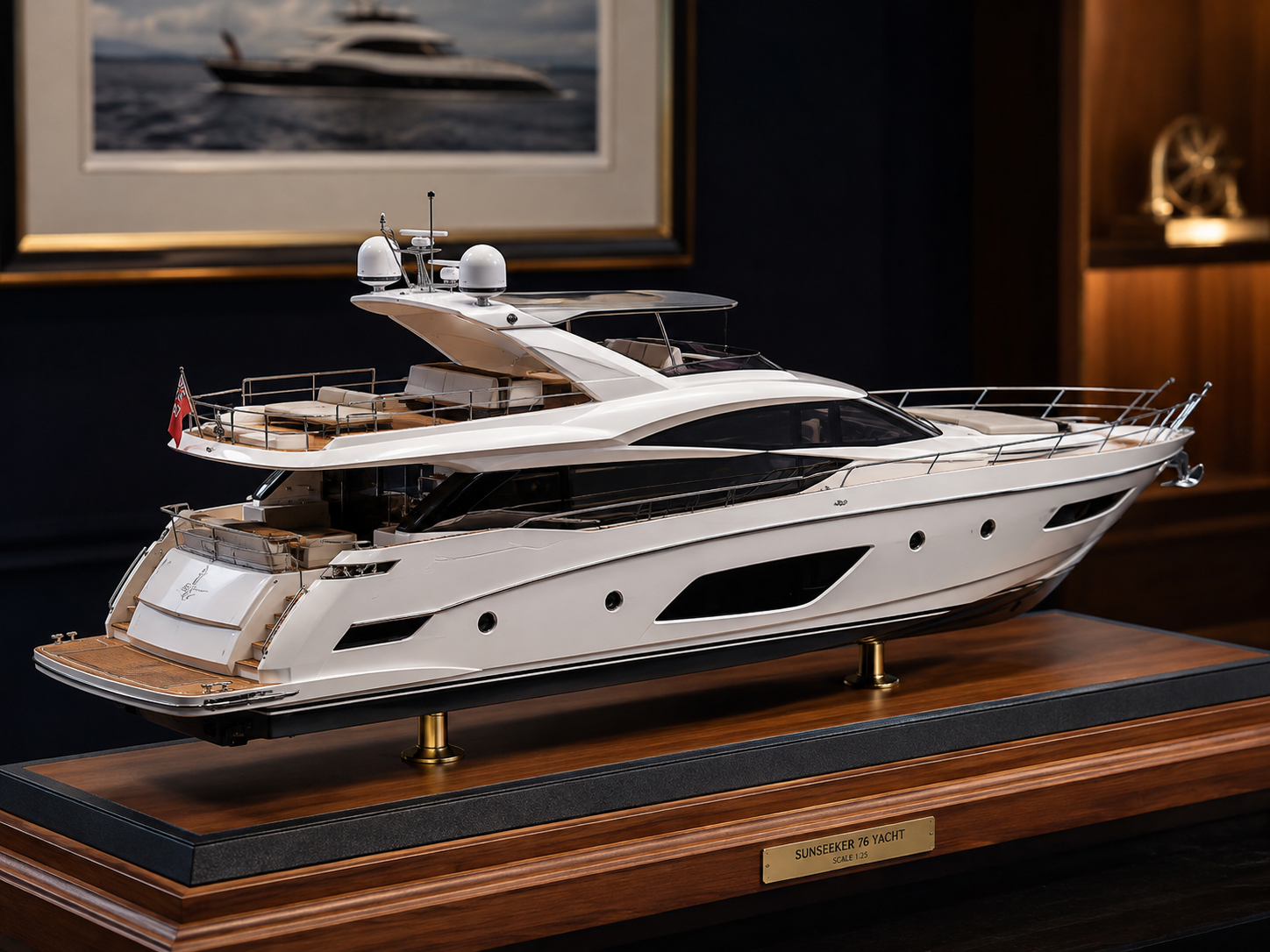
Yacht models require particular attention to hull contours, glazing, deck arrangements, exterior colors, and clean surface finishes. Digital design can establish the geometry, while careful finishing helps achieve the refined appearance expected for a yacht showroom or owner's gift.
Museum and Historical Ship Models
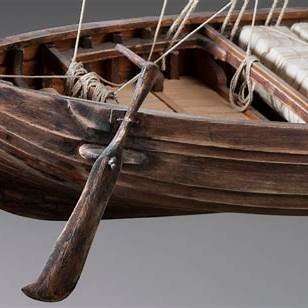
Historical models may require research into archival plans, photographs, construction details, and historical color schemes. Traditional craftsmanship remains valuable when reproducing distinctive structures, rigging, weathered finishes, or features that need individual attention.
Engineering Prototypes
When the objective is to review a new design or verify the arrangement of selected components, 3D printing can accelerate the creation of physical prototypes. Functional testing, dimensional verification, and material suitability must still be evaluated separately.
7. Why a Hybrid Manufacturing Process Often Works Best
For many premium display models, the most practical solution is not choosing between 3D printing and handcrafted production. It is combining the strengths of both.
- Digital design: Establish the vessel's principal dimensions, scale, and major structures from drawings and references.
- Component fabrication: Select 3D printing or other suitable manufacturing methods for individual parts.
- Manual assembly: Fit the hull, superstructure, decks, fittings, and other components together.
- Surface preparation and painting: Refine surfaces, apply colors, and reproduce vessel markings.
- Final inspection: Check proportions, alignment, component installation, paint quality, and presentation.
The exact workflow varies according to the vessel, model scale, reference materials, and delivery requirements. A professional manufacturer should be able to explain which techniques are appropriate for each project.
8. How to Choose the Right Ship Model Manufacturer
Before commissioning a custom ship model, consider these questions:
- Can the manufacturer work from GA drawings, hull lines, and photographs?
- How are scale dimensions and vessel proportions checked?
- Which materials and fabrication methods are suitable for the project?
- Can the manufacturer provide progress photos during production?
- Are the display base, engraved nameplate, and protective case included?
- How will the finished model be packed for international transportation?
Requesting these details before production helps establish a clear scope and reduces misunderstandings about the finished product.
Conclusion: Choose the Process That Fits the Vessel
3D printing offers flexibility for complex geometry and digitally designed components. Handcrafted production provides opportunities for detailed assembly, individual adjustments, and refined finishing. For many professional display ship models, combining both methods offers a practical balance of engineering accuracy, appearance, and production efficiency.
The most important factors are the quality of the source information, the suitability of the manufacturing process, and the care taken during finishing and inspection.
Looking for a Custom Ship Model Manufacturer?
Marine Ship Models specializes in custom scale ship models developed from engineering drawings, vessel photographs, and project-specific requirements. Whether you need a commercial vessel model, a yacht model, or a museum display piece, the manufacturing approach can be planned around your vessel and intended use.
Prepare your vessel name, approximate model length, GA drawings, and reference photographs to start a project discussion.


 Italiano
 English
 Dansk
 Deutsch
 한국어
 Français
 Suomi
 Bahasa Indonesia
 日本語
 Polski
 Português do Brasil
 简体中文
 Türkçe