
The maritime industry is undergoing a significant transformation in how companies present their technologies, services, and infrastructure at international exhibitions. While digital presentations, videos, and 3D animations remain important marketing tools, a growing number of exhibitors are rediscovering the power of physical models to engage audiences and communicate complex maritime concepts.
This trend was clearly visible at major industry events such as Singapore Maritime Week 2026 and Asia Pacific Maritime (APM) 2026, where thousands of maritime professionals, shipowners, port operators, offshore energy companies, and technology providers gathered to explore the latest industry developments.
Across exhibition halls, one presentation method consistently attracted attention: large-scale maritime models.
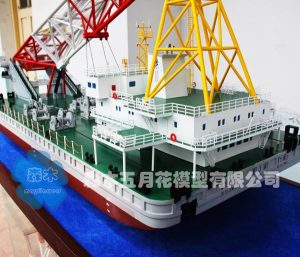
From container ships and LNG carriers to automated ports and offshore wind farms, physical models are becoming one of the most effective ways for companies to showcase their capabilities. As a result, demand for professional exhibition models has increased significantly, creating new opportunities for specialized model manufacturers such as MarineShipModels.

The Evolution of Maritime Exhibition Marketing
For many years, maritime exhibitions relied heavily on printed displays, technical drawings, brochures, and digital screens. While these tools remain useful, exhibitors increasingly face a challenge: attracting and retaining visitor attention in crowded exhibition environments.
Visitors today are exposed to hundreds of booths, countless videos, and thousands of marketing messages during a single event. Standing out requires something more engaging and memorable.
Physical models provide exactly that advantage.
A well-designed maritime model immediately captures attention because it transforms technical information into a tangible, three-dimensional experience. Visitors can walk around it, examine details from multiple angles, and gain a clearer understanding of the project being presented.
As a result, many exhibitors report that physical models generate longer visitor engagement times and more meaningful conversations compared to digital-only presentations.
Why Large Maritime Models Are Gaining Popularity
The maritime industry deals with some of the largest and most complex engineering projects in the world. Explaining these projects through drawings or computer renderings alone can be difficult.
Large-scale models help bridge that communication gap.
Better Visualization
Whether showcasing a 400-meter container vessel or a multi-billion-dollar port expansion project, a physical model allows visitors to immediately understand scale, layout, and design.
Complex technical concepts become easier to communicate when represented in three dimensions.
Increased Visitor Engagement
Trade show organizers and exhibitors consistently observe that visitors naturally gravitate toward physical models.
People are curious by nature. A large ship model or port diorama encourages visitors to stop, ask questions, and engage with company representatives.
This increased interaction often leads to stronger business opportunities.
Enhanced Brand Image
A professionally crafted model reflects a company’s commitment to quality, innovation, and attention to detail.
For maritime companies competing on a global stage, presentation quality can significantly influence how potential customers perceive their capabilities.
The Most Popular Maritime Exhibition Models in 2026
Several categories of models have become particularly popular at international maritime exhibitions.
Large Container Ship Models
As shipping companies continue investing in ultra-large container vessels exceeding 24,000 TEU, detailed ship models have become essential exhibition tools.
These models help shipping lines showcase:
- Fleet expansion programs
- New vessel classes
- Sustainability initiatives
- Technological innovations
Container ship models are frequently featured at logistics, shipping, and maritime trade shows around the world.
Port and Terminal Scale Models
Port operators increasingly rely on large-scale models to present infrastructure developments.
These models can illustrate:
- Container terminals
- Logistics parks
- Intermodal connections
- Smart port technologies
- Expansion projects
Port development models help investors, government officials, and customers better understand project scope and future potential.
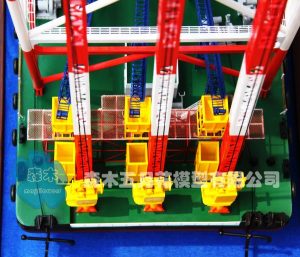
Automated Terminal Models
Automation continues to transform global port operations.
To demonstrate advanced technologies such as automated cranes, autonomous vehicles, and intelligent logistics systems, many operators now use interactive scale models.
These models allow visitors to visualize operational workflows that would otherwise be difficult to explain.
Offshore Wind Farm Models
The global transition toward renewable energy has fueled demand for offshore wind projects.
Developers frequently commission exhibition models to showcase:
- Wind turbine layouts
- Installation vessels
- Offshore substations
- Grid connection systems
These models provide investors and stakeholders with a clear understanding of project design and operational concepts.
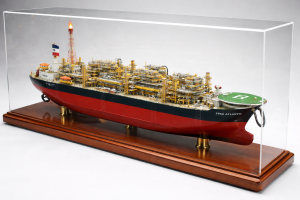
LNG Carrier Models
As the shipping industry adopts cleaner fuel technologies, LNG carriers have become increasingly important.
Exhibition models help demonstrate:
- Fuel containment systems
- Vessel design innovations
- Sustainability benefits
- Future energy transportation solutions
LNG vessel models are now common features at energy and maritime exhibitions worldwide.
Why Physical Models Outperform Digital Presentations
While digital technology continues to advance, physical models offer several advantages that cannot easily be replicated.
Tangibility Creates Impact
Visitors can immediately understand dimensions, proportions, and design features when viewing a physical model.
Unlike digital animations, models create a lasting visual impression.
Easier Communication
Complex projects often involve multiple stakeholders with varying technical backgrounds.
A model provides a universal communication tool that makes information accessible to everyone.
Greater Memorability
Exhibition attendees often remember an impressive model long after they leave the event.
This helps exhibitors strengthen brand recognition and increase follow-up opportunities.
How MarineShipModels Supports Global Exhibitors
As demand for exhibition-quality maritime models continues to grow, MarineShipModels has become a trusted partner for companies seeking professional presentation solutions.
The company specializes in creating highly detailed custom models for:
- Shipping companies
- Port authorities
- Offshore energy developers
- Shipyards
- Marine equipment manufacturers
- Government agencies
- Maritime consultants
Each project is tailored to the client’s specific objectives and exhibition requirements.
Advanced Manufacturing and Craftsmanship
MarineShipModels combines modern production technologies with traditional craftsmanship to achieve exceptional quality.
The production process may include:
- CNC machining
- 3D printing
- Laser cutting
- Precision casting
- Hand assembly
- Professional painting and finishing
This combination ensures that every model accurately represents the original vessel, facility, or infrastructure project.
Custom Solutions for Maritime Exhibitions
MarineShipModels offers a wide range of customization options, including:
- Large-scale display models
- Interactive exhibition models
- LED lighting systems
- Transparent cutaway sections
- Operational port simulations
- Branded display bases
- Protective display cases
Whether the goal is attracting visitors, explaining a technical concept, or supporting investment discussions, the company can create a model tailored to the client’s needs.
The Future of Maritime Exhibition Models
As maritime projects become increasingly sophisticated, the demand for high-quality physical models is expected to continue growing.
Industry experts anticipate strong future demand for:
- Smart port models
- Green shipping technology displays
- Offshore renewable energy models
- Autonomous vessel models
- Integrated logistics network models
Physical models will remain a critical tool for communicating complex maritime concepts in a way that digital media alone cannot achieve.
Konklusion
The success of maritime exhibitions such as Singapore Maritime Week 2026 and Asia Pacific Maritime 2026 highlights a clear industry trend: physical models are becoming more important than ever.
From container ships and LNG carriers to automated terminals and offshore wind farms, exhibition models provide unmatched visual impact, visitor engagement, and communication value.
As a professional maritime model manufacturer, MarineShipModels helps companies transform complex maritime projects into stunning exhibition centerpieces. Through a combination of technical accuracy, innovative manufacturing, and exceptional craftsmanship, MarineShipModels delivers custom models that not only attract attention but also help clients tell their stories more effectively on the global stage.


 Dansk
Dansk  English
  Deutsch
  한국어
한국어  Français
  Italiano
  Suomi
Suomi  Bahasa Indonesia
  日本語
日本語  Polski
  Português do Brasil
  简体中文
简体中文  Türkçe